
Last updated October 30, 2026
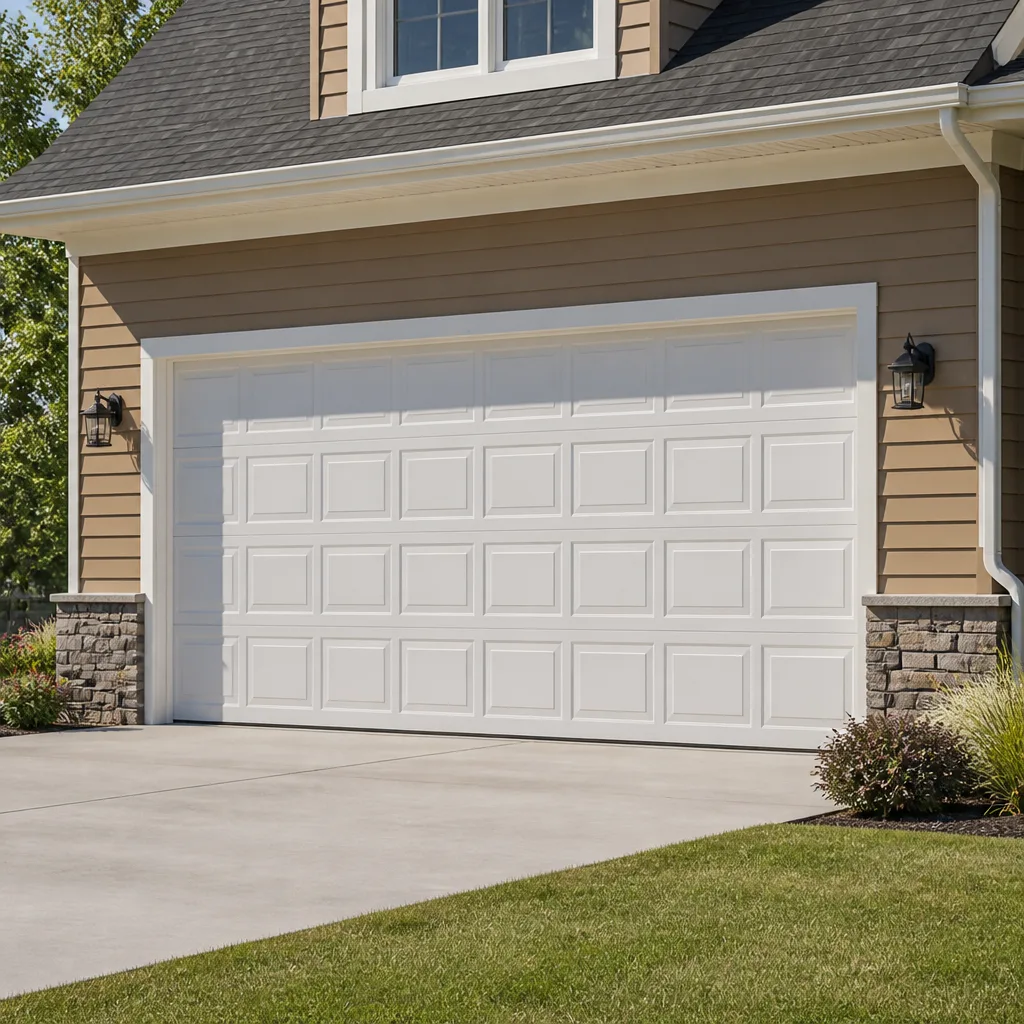 Raised-panel steel
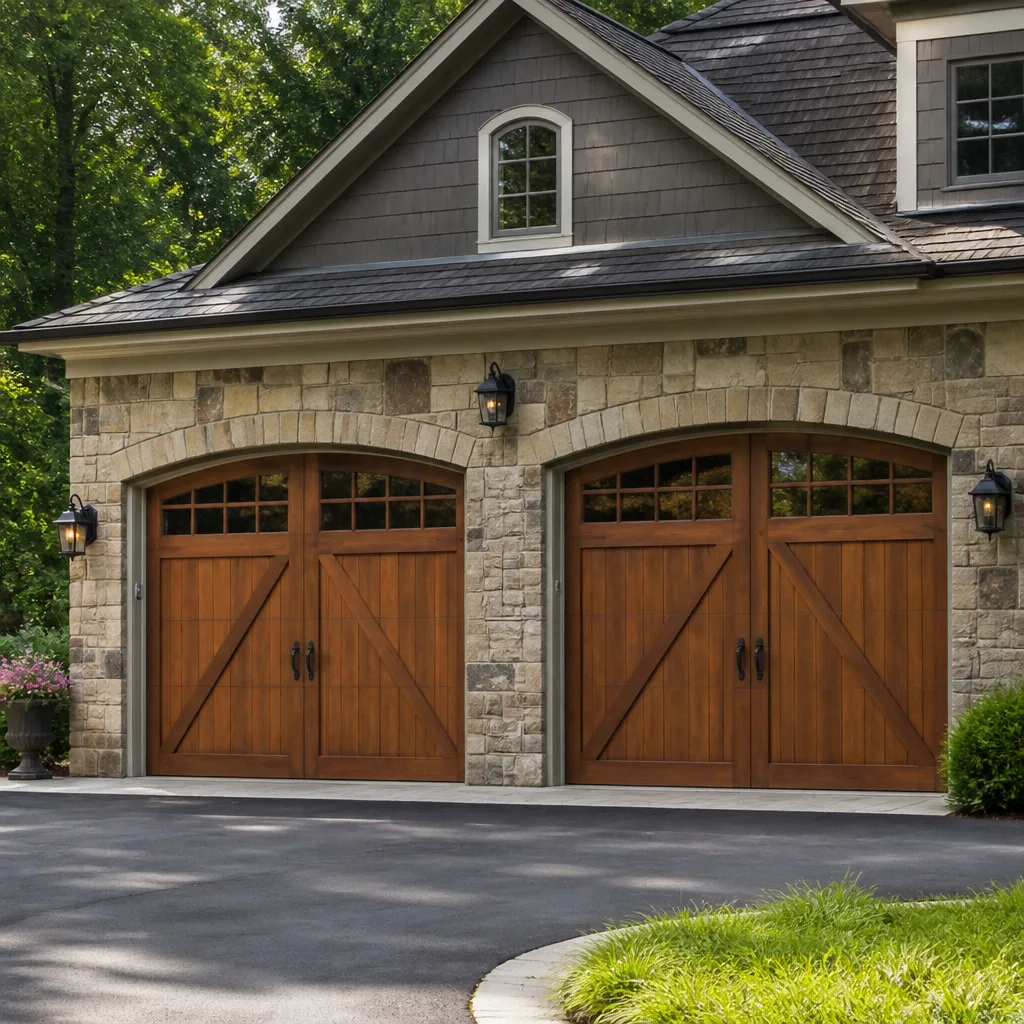 Carriage house
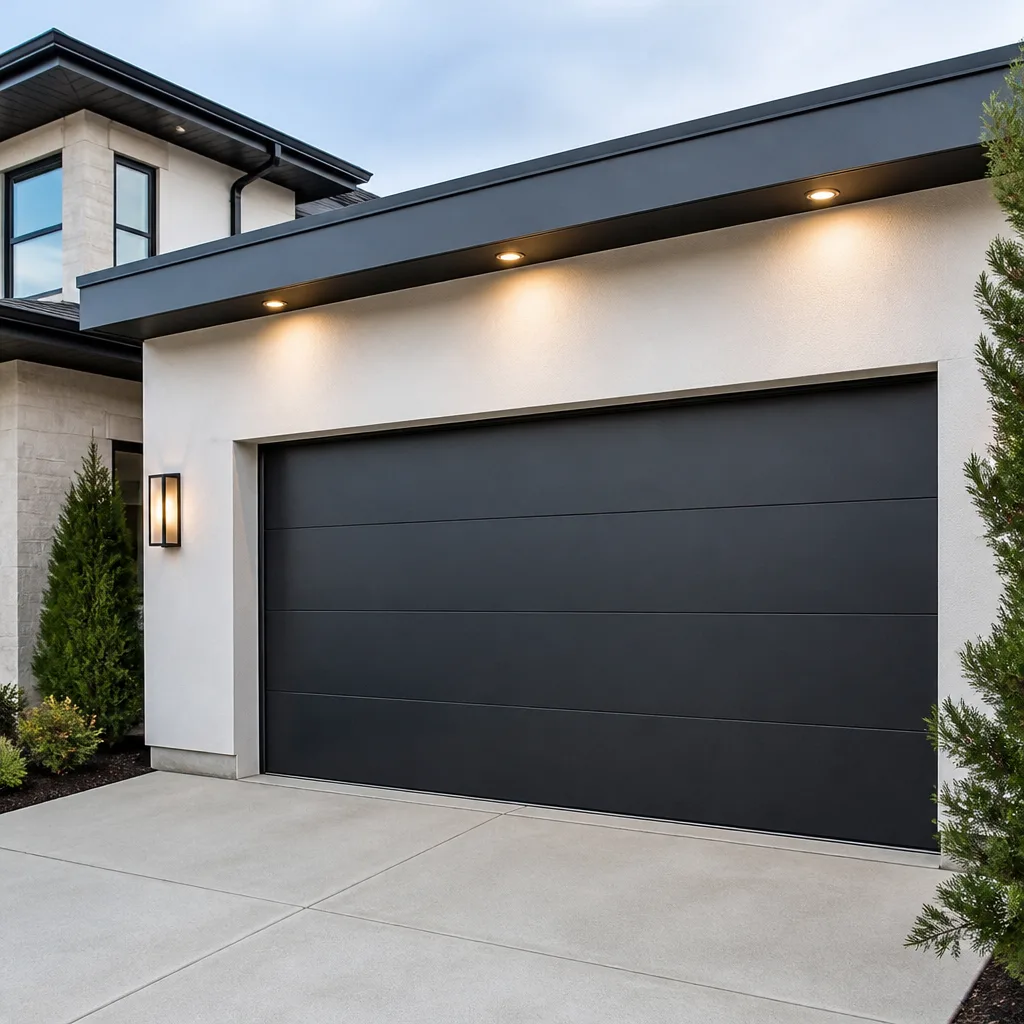 Modern flush
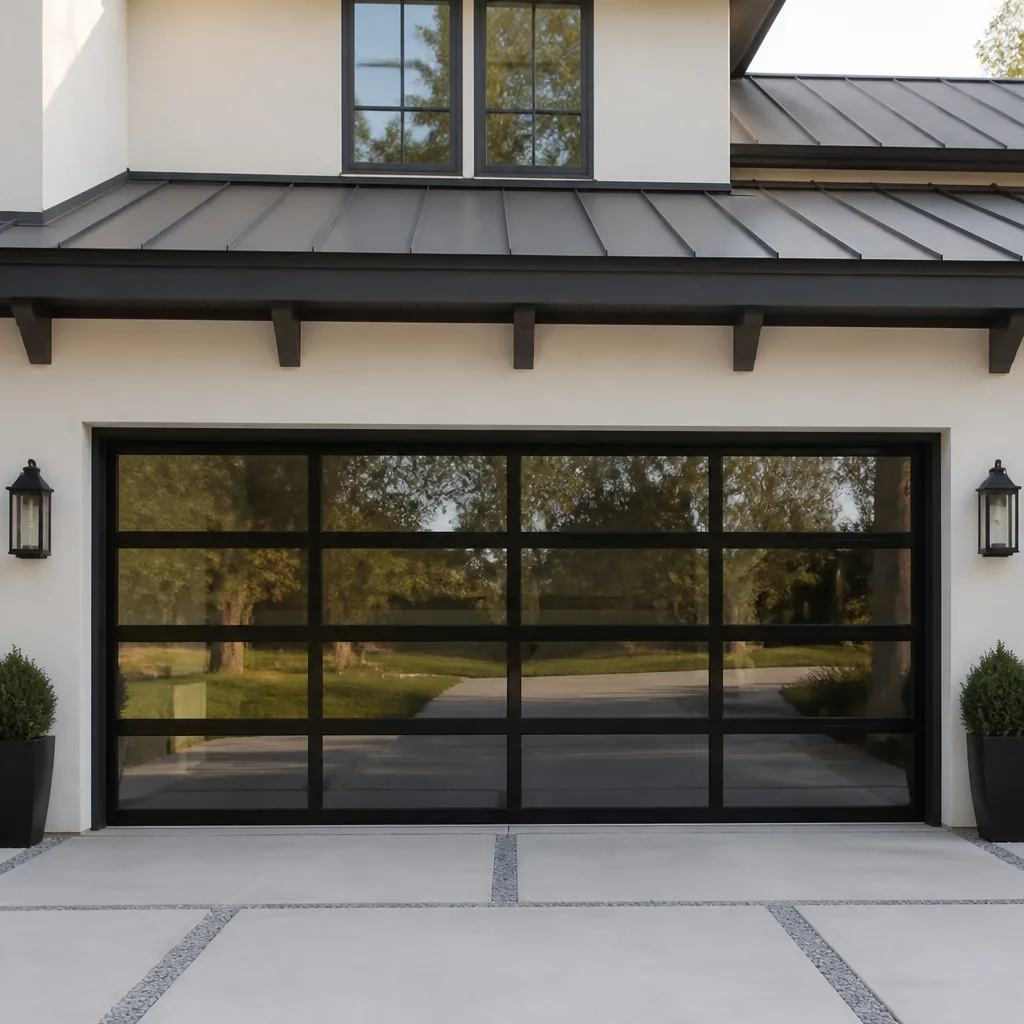 Full-view glass
 LiftMaster openers
 Chamberlain openers
Full 25-point door and opener safety check with every visit - springs, cables, rollers, tracks, and your LiftMaster or Chamberlain opener included
You get a price before we start. It does not change when the truck arrives.
Get your free estimateGarage Door Warning Signs: A Roseville Homeowner’s Reference Guide
Here’s a number that should get your attention: most garage door failures in Roseville aren’t sudden. They’re the result of two to six weeks of perfectly audible, perfectly visible warnings that go unnoticed because nobody taught homeowners what to listen for. A spring doesn’t just snap on a random Tuesday. It creaks, shifts, and changes pitch first. This guide and our more guides & resources exist because catching a door at the 80% failure point costs a fraction of what an emergency repair costs at 2 a.m. We’re going to walk through the signals most guides skip: the sounds, the visual tells, the opener behavior changes, and the seasonal quirks unique to Roseville’s climate. By the time you finish reading, you’ll know more about your garage door than most of your neighbors know about their cars.
Quick Answer
The most common garage door warning signs in Roseville include a door that hesitates before moving, a grinding or squealing sound during operation, visible gaps in torsion spring coils, cables that look fuzzy or frayed, and an opener that reverses mid-cycle or struggles in afternoon heat. If your door makes a sound it didn’t make six months ago, or moves slower than it did last season, that’s a component asking for attention, not a door “working fine.” Most of these issues cost under $300 to fix when caught early, and several hundred more when they fail completely.
Styles & brands we work with
Table of Contents
- The Sound Library: What Your Door Is Trying to Tell You
- The Spring Coil Spacing Check Most Homeowners Miss
- Reading Opener Behavior Changes Like a Diagnostic Code
- The Roseville July Bind: Why Heat Makes Doors Stick
- The Quarterly Safety Reversal Test and What “Pass” Actually Means
- Cable Wear Signals You Can Spot in 30 Seconds
- Track Alignment and Roller Wear: The Slow Grind
- A Seasonal Maintenance Calendar for Roseville Homes
The Sound Library: What Your Door Is Trying to Tell You
Garage doors talk. Not metaphorically. Every component has a specific sound signature, and once you learn the vocabulary, a quick listen during operation tells you more than a visual inspection ever will. In our repair work across Roseville, we’ve found that most homeowners can distinguish between five distinct sounds with about ten minutes of practice. Here’s the library.
The dry hinge squeak. This is a high-pitched, rhythmic chirp or squeak that follows the door panel-by-panel as it moves. It’s usually loudest at the top and bottom panels, because those hinges flex hardest during the curve of the track. The sound stops when the door stops. This is lubrication, not replacement. White lithium grease on hinge pins, a five-minute job, resolves it in almost every case. If it doesn’t, the hinge may be worn past greasing, but that’s uncommon on doors under 15 years old.
The worn bearing grind. A grind is different from a squeak. A grind sounds mechanical, like rocks in a coffee grinder, and it comes from the rollers or the opener’s drive gear. Worn ball bearings in rollers produce a grumble that’s deeper in pitch and slower in rhythm than a hinge squeak. If the sound seems to come from inside the motor housing, it’s likely the drive gear, which is a replaceable part on most openers including Chamberlain and Genie units. Ignored, a worn drive gear eventually strips, and the opener sounds like it’s spinning a cheese grater while the door doesn’t move.
The cable fray tick. This one is subtle and specific: a light, irregular ticking that occurs only when the door is in motion and only from one side. It’s the sound of a single strand of a lifting cable snapping as the cable unwinds from the drum. By itself it’s harmless. What it signals is not. A cable that’s lost a strand or two has lost a significant percentage of its load-bearing capacity, and on doors with extension springs, a snapped cable means the door travels unevenly and can bind in the track. We’ve responded to Roseville homes where the ticking had been present for a month, and the cable failed on a Saturday morning with a car trapped in the garage.
The spring pop. Springs never fail silently. There’s always a warning. In the weeks before a torsion spring breaks, it often makes small popping or crackling sounds as individual coils settle and shift. These are most audible when the door first starts moving from a closed position. Think of it as the spring telling you it’s redistributing stress. A healthy spring is quiet. A popping spring is asking for replacement.
The opener strain hum. When an opener struggles, its motor hum deepens and runs louder than it did when new. A motor under load draws more amperage, and the hum is the audible signature of that draw. If your opener sounds like a microwave running on low, and the door moves slower than it did last season, the opener is working against resistance. In Roseville’s climate, that resistance is usually a spring that’s lost tensile strength, transferring door weight to the opener that the opener was never designed to carry.
One thing we emphasize in every Garage Door Repair in Roseville consultation: your ears are diagnostic tools. If a sound is new, it’s meaningful. Doors don’t develop new sounds for no reason.
The Spring Coil Spacing Check Most Homeowners Miss
Before a torsion spring breaks, it often shows visible evidence of fatigue. The check takes thirty seconds and requires no tools. Here’s why it matters: in Roseville, where summer garage temperatures regularly exceed 100 degrees, springs cycle through more expansion and contraction than they would in a coastal climate, and that thermal stress accelerates the kind of fatigue that shows up in coil spacing.
The check starts with the door fully closed and the spring under full tension. Look at the spring mounted on the horizontal bar above the center of the door. Healthy torsion springs have coils that are evenly spaced across the entire length of the spring. Every gap between coils should look identical to every other gap.
What you’re looking for:
- Uneven gaps. If the space between coils varies, some coils tighter, some wider, the spring has begun to yield unevenly. This is the visual equivalent of a pop, and it means internal stress distribution is no longer uniform. Failure is typically weeks, not months, away.
- A visible separation line. A clean, bright line running across the coil at one point, like a crack in a pencil lead, is a fatigue crack beginning. It won’t be there long before it propagates.
- Rust at the gap edges. Surface rust is normal on older springs. Rust at the edges of coils is different. It means the coils are rubbing against each other under load, and that friction generates heat and wear at the contact points.
- Any sag between coils in the center. If the spring looks bowed or drooping in the middle when the door is closed, the spring has lost structural rigidity and is no longer storing tension evenly.
This check is diagnostic, not a repair. If you see any of these signs, schedule a spring replacement before the break happens. A planned replacement costs a predictable amount and lets you schedule it at your convenience. An emergency replacement happens when the spring decides it’s done, which in our experience is disproportionately likely on evenings, weekends, and the first genuinely hot week of a Roseville summer.
For homeowners with extension spring doors, the check is different but equally important. Those doors have two springs running parallel to the horizontal tracks. Both sides should be taut, not slack. Slack means a spring has lost tension or the safety cable has been compromised, and the remaining spring is carrying more than its rated load.
Reading Opener Behavior Changes Like a Diagnostic Code
Your opener doesn’t have a check-engine light, but it has a check-engine behavior. The key is knowing which behavior maps to which component. Here are the four behavioral changes we see most often in Roseville homes, and what each one points to.
- The half-second hesitation. You press the button, there’s a beat of nothing, then the door moves. That hesitation is the opener’s motor overcoming inertia against a load it wasn’t expecting. In most cases, the spring has lost enough tension that the opener is now lifting more of the door’s weight than it was designed to. The half-second hesitation is the opener saying “this is heavy.” Left unaddressed, the opener’s motor, gears, and circuit board all take on damage that a spring replacement would have prevented. On a Garage Door Opener Repair in Roseville call, this is the second most common diagnosis.
- Slower travel on hot afternoons. If the door moves at normal speed in the morning but noticeably slower at 4 p.m., that’s heat expansion. Metal tracks expand by measurable fractions in a Roseville July, and if the track clearance was already marginal, expansion creates friction. It’s not an opener problem, and replacing the opener won’t fix it. The fix is track adjustment or roller replacement, sometimes both.
- Reversal mid-cycle. The door starts up, gets partway along the track, then reverses direction and returns to the floor. This is the opener’s safety force setting triggering. The opener senses resistance above its programmed threshold and reverses to prevent damage or injury. A door that reverses consistently at the same point has an obstruction or a track issue at that point. A door that reverses inconsistently, at random points, usually has a force setting that’s drifted or a spring that’s losing tension unevenly.
- Grinding at startup that fades after a second. This is typically the drive gear on a chain or screw drive opener. The gear is metal, the worm screw is metal, and when lubrication breaks down or the gear teeth begin to chip, the first second of movement produces a grinding sound that disappears as the gear seats. On LiftMaster and Chamberlain units, this gear is a known wear item, and replacement is a standard, predictable repair. Ignored, the gear strips completely.
One note on opener logic: modern openers from Chamberlain and Genie include diagnostic LED codes that flash after a reversal or a refused command. The code is printed on the opener chassis, and it’s worth noting what the lights say before you call anyone. It saves time on the diagnosis. We can interpret codes over the phone, which means your first call might resolve the question without a service visit.
The Roseville July Bind: Why Heat Makes Doors Stick
Roseville has a specific seasonal signature that homeowners in Sacramento, Rocklin, and Lincoln don’t experience in quite the same way: the July bind. It works like this. A door operates smoothly all morning. By late afternoon, it’s slow, it groans, and it may refuse to close without a nudge from the wall button. By 9 p.m., when the garage has cooled, the door works normally again.
That pattern is not a spring problem. It’s thermal expansion, and Roseville’s summer temperature swings are ideal for producing it.
Steel expands as it heats. Your door panels are steel, your tracks are steel, your hinges are steel or zinc-plated steel. When the garage reaches 100 to 110 degrees, the door itself can expand by a small but mechanically significant amount. The tracks expand too, and the combined effect closes the clearance gap between roller and track. If that clearance was already tight due to track alignment, roller wear, or previous impact damage, the door binds.
The tell-tale signs of a heat bind:
- The door binds in the afternoon but not in the morning.
- The binding is worse on the side of the garage that gets direct afternoon sun.
- The door groans or scrapes during travel but doesn’t make noise when stationary.
- Pressing the wall button and “helping” the door by hand overcomes the resistance.
- The problem disappears entirely between November and May.
If this describes your door, don’t replace the spring. The spring is doing its job. The fix is a track and roller adjustment, and it’s a job we handle regularly in Roseville’s hotter neighborhoods. A technician measures track spacing at multiple points along the travel and adjusts the mounting brackets to restore clearance. It’s not uncommon for the fix to involve replacing nylon-ball rollers with steel-bearing rollers that tolerate heat better, especially on doors that face west.
The important thing is not to ignore the July bind. The added friction forces the opener to work harder, and every week of heat-bind operation is measurable wear on the opener’s motor and gear. By the time fall arrives, the opener may have sustained more damage than a simple track adjustment would have cost to prevent.
The Quarterly Safety Reversal Test and What “Pass” Actually Means
Every garage door opener manufactured since 1993 is required by federal law to include a safety reversal mechanism that stops and reverses the door when it encounters resistance during downward travel. But “required to include” and “still functioning” are different things, and the failure mode of a safety reversal system is silent. The door looks like it works. It just doesn’t stop when it should.
Here’s the test, step by step. It takes sixty seconds and should be run every three months, which in Roseville’s temperature extremes we encourage more than the standard annual recommendation.
- Open the door fully using the wall button or remote.
- Place a 2×4 piece of lumber flat on the floor directly under the center of the door’s travel path. A rolled-up towel works if you don’t have lumber.
- Close the door using the wall button. Do not use the remote for this test. The wall button is the test standard.
- Watch the door as it descends. It should contact the 2×4 and immediately reverse direction, returning to the fully open position.
- Note the point of reversal. A door that reverses before touching the object is sensing the resistance correctly. A door that pauses, pushes down on the object, and then reverses is marginal. A door that does not reverse is failing.
What a “pass” actually looks like: the door reverses within one second of first contact with the object. It doesn’t slow down gradually and then reverse. It doesn’t rest on the block for a moment while the opener thinks. It reverses like it hit something solid, because it did.
What a “borderline pass” looks like: the door contacts the object, slows, pushes for a half-second or so, and then reverses. That’s a force setting that’s drifted too high, and the door is applying more downward pressure than the opener’s manual specifies. Over time, that pressure can cause panel damage, and in a worst case, the door could fail to reverse for a small object or a child.
Adjusting the force setting is done through a small screw or dial on the opener chassis, usually near the light cover. The procedure varies by model, but on LiftMaster and Chamberlain units, it’s a matter of turning the down-force adjustment counterclockwise in quarter-turn increments and re-running the test. If you’re not comfortable doing this, or the door won’t pass after adjustment, that’s a service call, not a DIY escalation. This is one of the few garage door adjustments where the stakes are genuinely high.
We include this test in every service visit we make in Roseville, and we recommend homeowners run it themselves between visits. It’s the only test on this list that’s about safety rather than function, and it’s the one most likely to be neglected.
Cable Wear Signals You Can Spot in 30 Seconds
Garage door cables are overlooked because they’re thin, they’re in shadow, and they don’t make noise until they’re already failing. But cable wear is visible, and a thirty-second check once a month catches it early enough to prevent the most dramatic garage door failures we see in Roseville.
Here’s what to look for, in order of urgency:
- Fraying at the end fitting. The cable anchors to the bottom bracket with a loop formed around a metal fitting. This is the highest-stress point on the entire cable assembly, and it’s where fraying starts. Look for small, separated strands near the fitting. Even two or three broken strands here mean the cable is in the final stage of its service life.
- Kinks or flat spots. Run your eye along the cable’s exposed length. A cable that’s been mishandled, or that jumped the drum at some point in its life, develops permanent bends. A bend is a stress concentrator. Cables break at bends the same way wire hangers break at bends.
- Rust anywhere along the length. Surface rust on a cable is normal after ten years. Rust that flakes, or rust concentrated at one point, is corrosion that has penetrated below the surface. The cable’s rated strength is reduced, and on a door with a torsion spring, that cable is holding back stored energy. A corroded cable under tension is a failure waiting for a hot afternoon.
- Uneven cable tension on extension spring doors. On a door with extension springs, look at the two cables while the door is closed. They should both be straight and taut. If one is taut and the other is slightly slack, the slack side has a spring that’s lost tension or a cable that’s stretching. Either way, the loaded side is carrying more than its share.
If you spot any of these, the repair is a cable replacement. It’s not an expensive job, but it’s not a DIY job either. The cable on a torsion spring door is under constant tension from the spring, and releasing that tension without the proper tools and sequence is genuinely dangerous. In Garage Door Installation in Roseville work and on repair calls, cable handling is one of the procedures we never shortcut. If your cable shows wear, call a specialist.
Track Alignment and Roller Wear: The Slow Grind
Not all garage door problems announce themselves with a bang or a scream. Some develop as a slow degradation that eats away at the door’s operating margins over months, until one morning the door simply doesn’t want to move without help. Track alignment and roller wear are the two slow-grind culprits.
The track is a formed steel channel that guides the door’s rollers from the vertical closed position to the horizontal open position. The track is mounted to the wall and ceiling with brackets, and those brackets are adjustable. Over years of operation, brackets shift. A bolt works loose. A car door or a storage box taps the track one time too many. The track develops a deviation, and from that point on, the rollers are running slightly out of their intended path.
The symptoms are progressive:
- The door shudders slightly at a specific point in its travel, usually the same spot every time.
- One side of the door sits slightly higher than the other when closed, visible as an uneven gap along the bottom seal.
- The door makes a scraping sound at the curve of the track, where vertical becomes horizontal.
- The rollers show flat spots or visible wear on one side of the wheel.
Roller wear compounds the problem. As the track drifts, the roller is forced against one side of the channel. The roller wears on that side. The wear reduces the roller’s diameter, which means the door sits slightly lower in the track, which increases friction, which accelerates further wear. A door with original steel-ball rollers and a slightly misaligned track is essentially grinding itself down on every cycle.
The fix depends on severity. A track that’s drifted but not damaged can be realigned and the brackets re-tightened. Worn rollers are replaced, and we typically recommend nylon-encased steel-bearing rollers on all Roseville doors—our Choosing the Right Garage Door Brand: A Buyer’s Guide for Roseville covers component selection—because they tolerate our summer heat without expanding the way all-steel rollers do. The difference in door noise and opener strain after a roller replacement is often immediate and dramatic.
One thing to know about track alignment: it’s a feel-based adjustment more than a measurement-based one. A technician runs the door through its travel multiple times, watching and listening, making small bracket adjustments between runs. It’s the kind of repair where experience matters more than tools, and it’s why a specialist approach beats a generalist guess. We see misaligned tracks that have been “repaired” by other contractors who tightened a bracket and called it done, leaving the underlying drift in place.
A Seasonal Maintenance Calendar for Roseville Homes
Roseville’s climate imposes a specific maintenance rhythm on garage doors, which our Seasonal Garage Door Care for Roseville: Year-Round Homeowner’s Guide covers in detail—it doesn’t match the generic “service your door annually” advice that most national guides offer. Here’s what we recommend for Roseville homeowners, based on how our local heat, cold snaps, and dry-air dust actually affect door components.
March, before the spring heat arrives. Run the full sound library check. Listen to the door through a full open-close cycle. If you hear anything new since fall, address it now. Also run the safety reversal test from the section above. Spring is the season when thermal expansion first becomes an issue in late afternoons, so this is the time to check track clearance while the garage is still cool.
June, before the peak heat. Check spring coil spacing on torsion springs. The spring has been cycling through spring temperature changes since March, and any fatigue cracks that formed over winter will be visible now. Lubricate hinges, rollers, and the opener drive chain if you have one. Use white lithium grease on hinges and chain, silicone spray on rollers. Don’t use WD-40, which is a water displacer, not a lubricant, and which strips the grease that’s already there.
September, after the peak heat. Inspect cables for wear. Summer is hard on cables because the combination of heat and continuous cycling through the season’s temperature swings accelerates fatigue. Also check the bolts on all track brackets. Thermal expansion and contraction through a Roseville summer can loosen hardware that was tight in spring.
December, before any winter storms. Lubricate again with white lithium grease. Cold doesn’t test Roseville doors the way heat does, but the dry air and dust of late fall can thicken old lubricant and make doors creak on cold mornings. Run the safety reversal test again. It costs you one minute.
This calendar assumes a door that’s currently in good working order. A door that’s already showing signs from the sections above should be serviced immediately, not scheduled into the next seasonal check.
Common Mistakes to Avoid
- Greasing a noisy door to mask the noise. A popping spring that gets greased still pops, just quieter. The grease makes the symptom less audible without addressing the cause. If the noise is mechanical rather than frictional, greasing is a delay, not a fix.
- Replacing the opener when the spring is the problem. A slow door with a tired spring overloads the opener. Replacing the opener without addressing the spring means the new opener starts its life under the same overload and fails early. This is the most expensive misdiagnosis we see in Roseville, because both components end up replaced when only one needed it.
- Adjusting the opener force setting up to fix a slow door. The force setting is a safety limiter, not a power booster. Raising it to push through spring or track resistance defeats the safety reversal function and can cause panel damage. If the door is slow, fix the reason it’s slow.
- Running the door manually to test spring balance on a regular basis. The manual release handle disconnects the opener from the door, which is useful for diagnostics. But repeated manual operation with an unbalanced door transmits surprising shock loads to the panels and hinges. One test is fine. Don’t make it a habit.
- Ignoring a July bind because the door works again in the morning. The bind may be temperature-dependent, but the track wear it causes is not. Every afternoon of binding operation is grinding down the rollers and opener gear. Fix it in the season it appears, not next season.
- Painting over rust on the door bottom panels. Roseville’s dry climate limits rust compared to coastal California, but bottom panels can still corrode where sprinkler overspray hits. Painting over the rust without treating the metal underneath just hides the damage while it spreads under the paint. The proper fix is mechanical rust removal, a rust-inhibiting primer, and a quality repaint, or panel replacement if the corrosion has penetrated.
- Running the door with the safety reversal system bypassed. Some homeowners disable the sensor eyes because they “get in the way” or trigger falsely. That’s a federal safety violation and a genuine hazard. The sensor eyes are not optional equipment.
See the difference
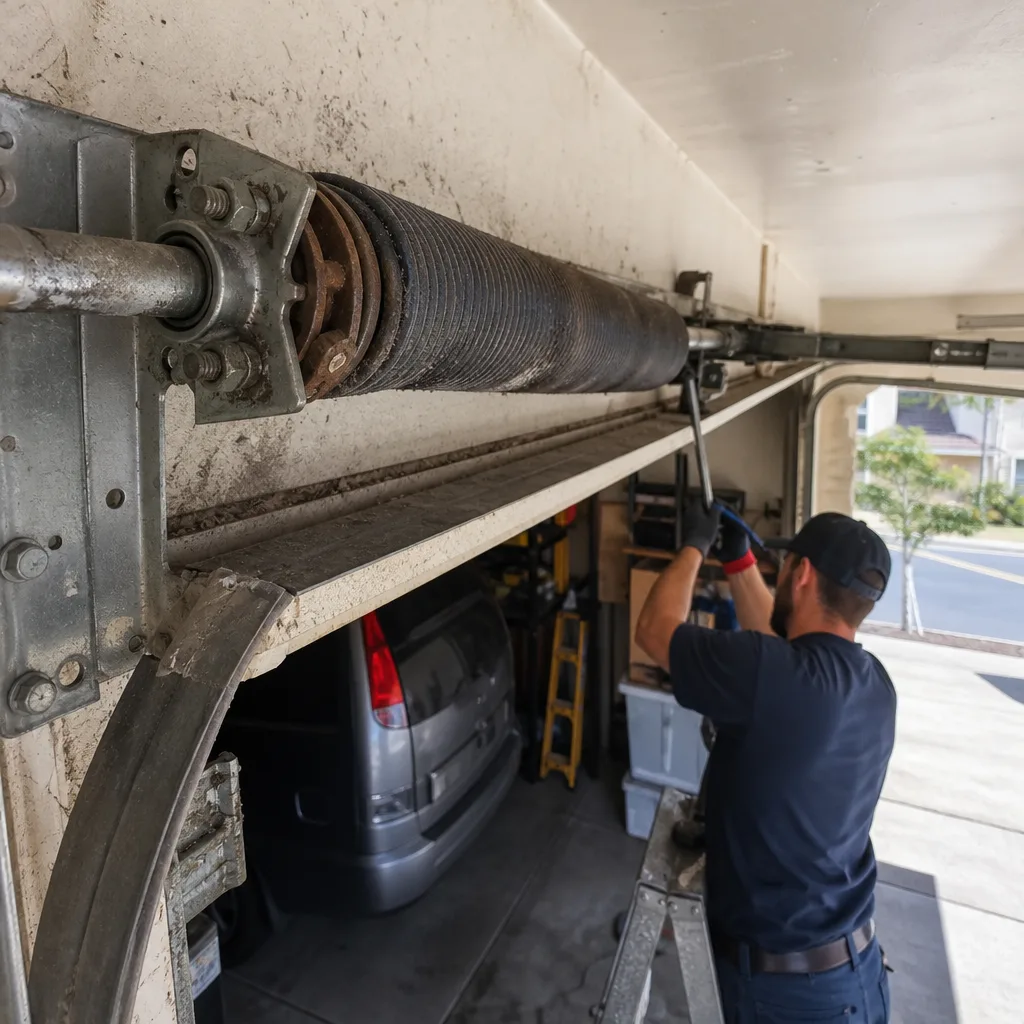 Before
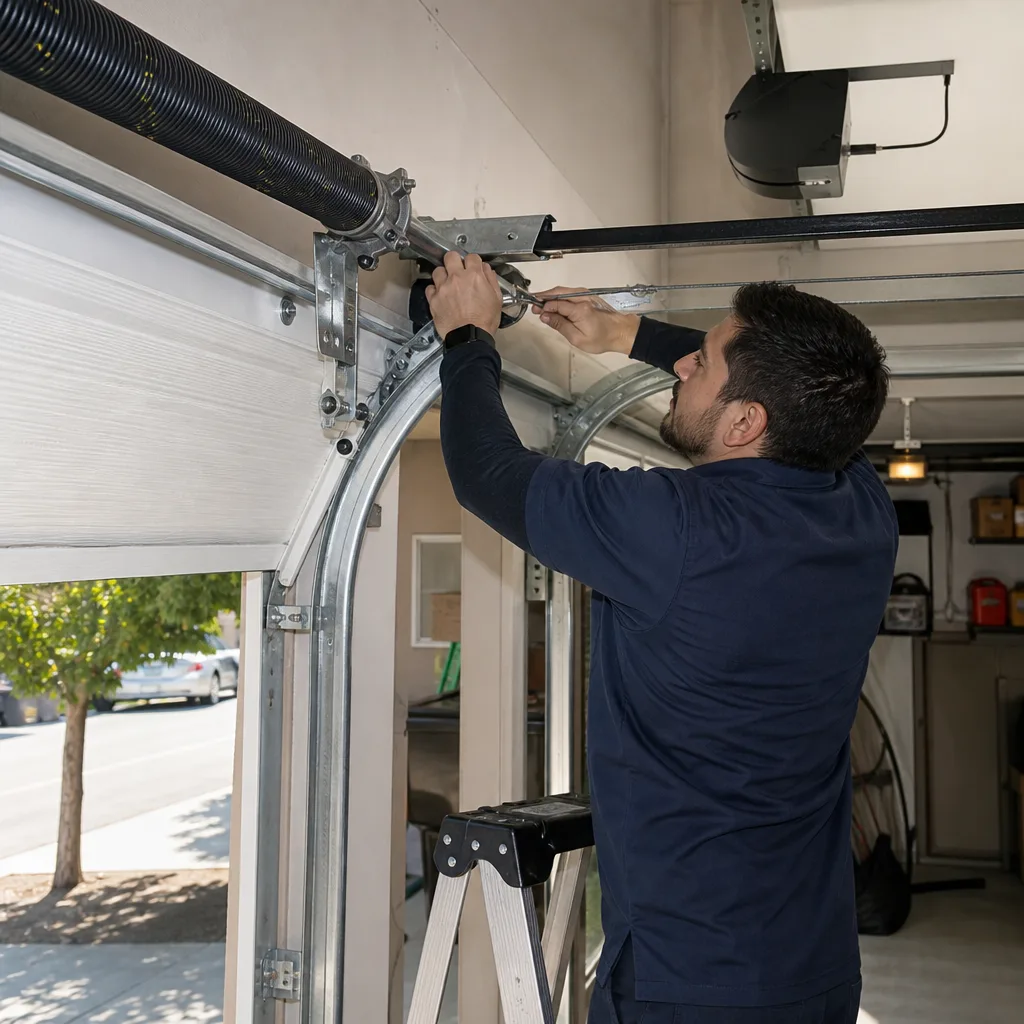 After
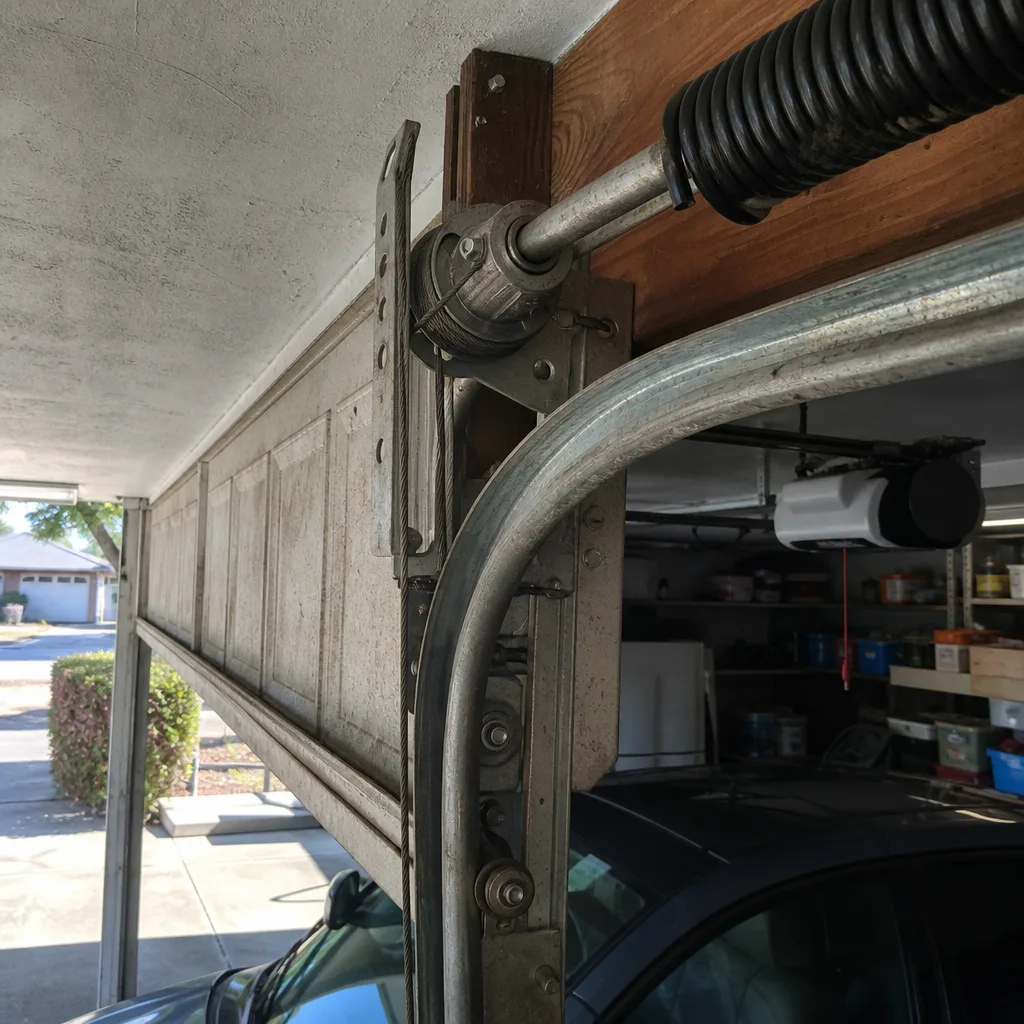 Before
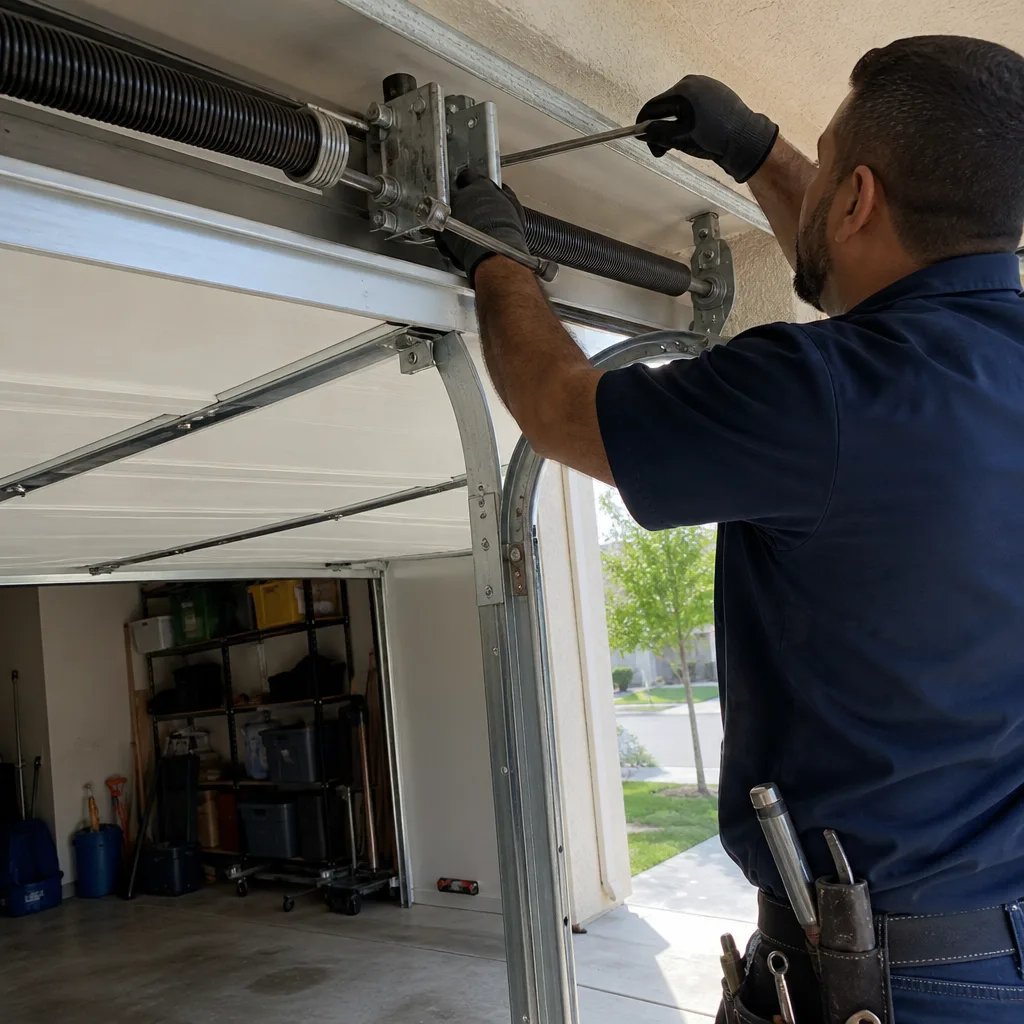 After
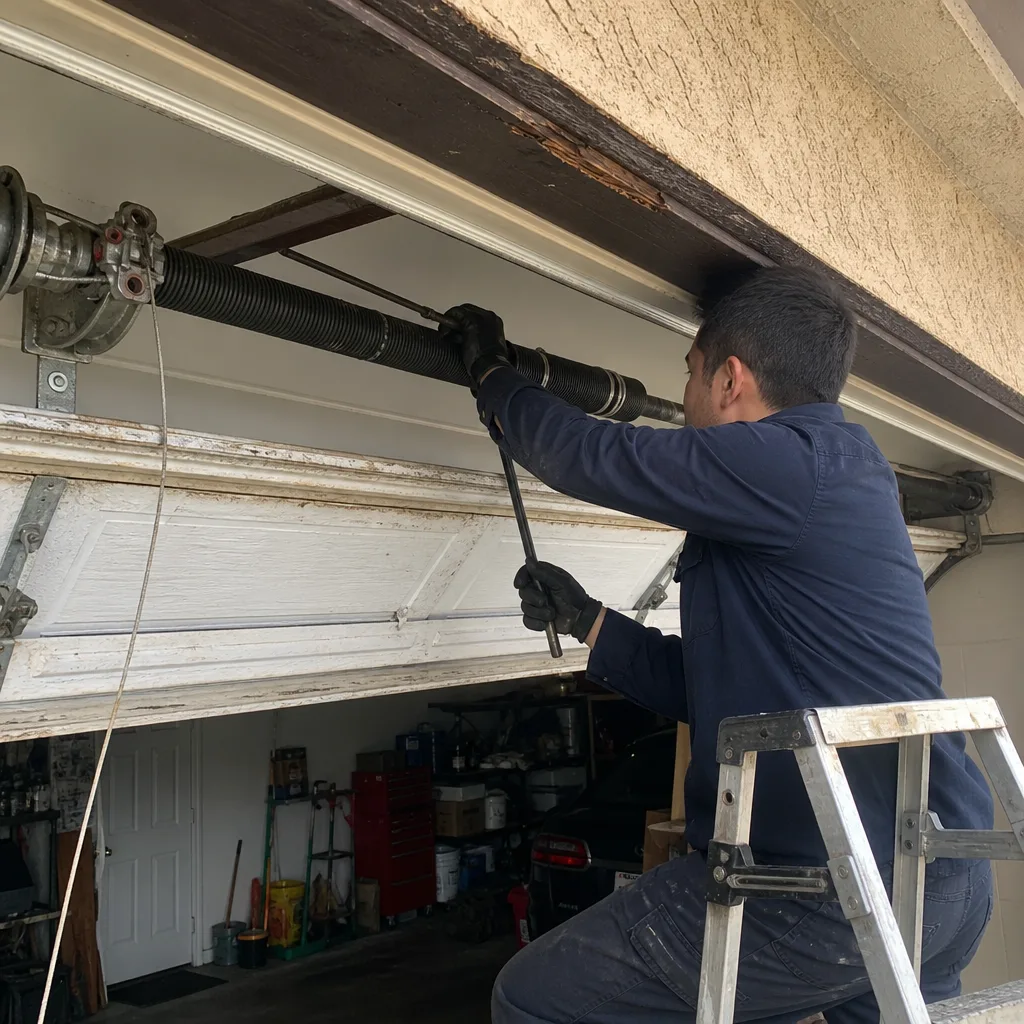 Before
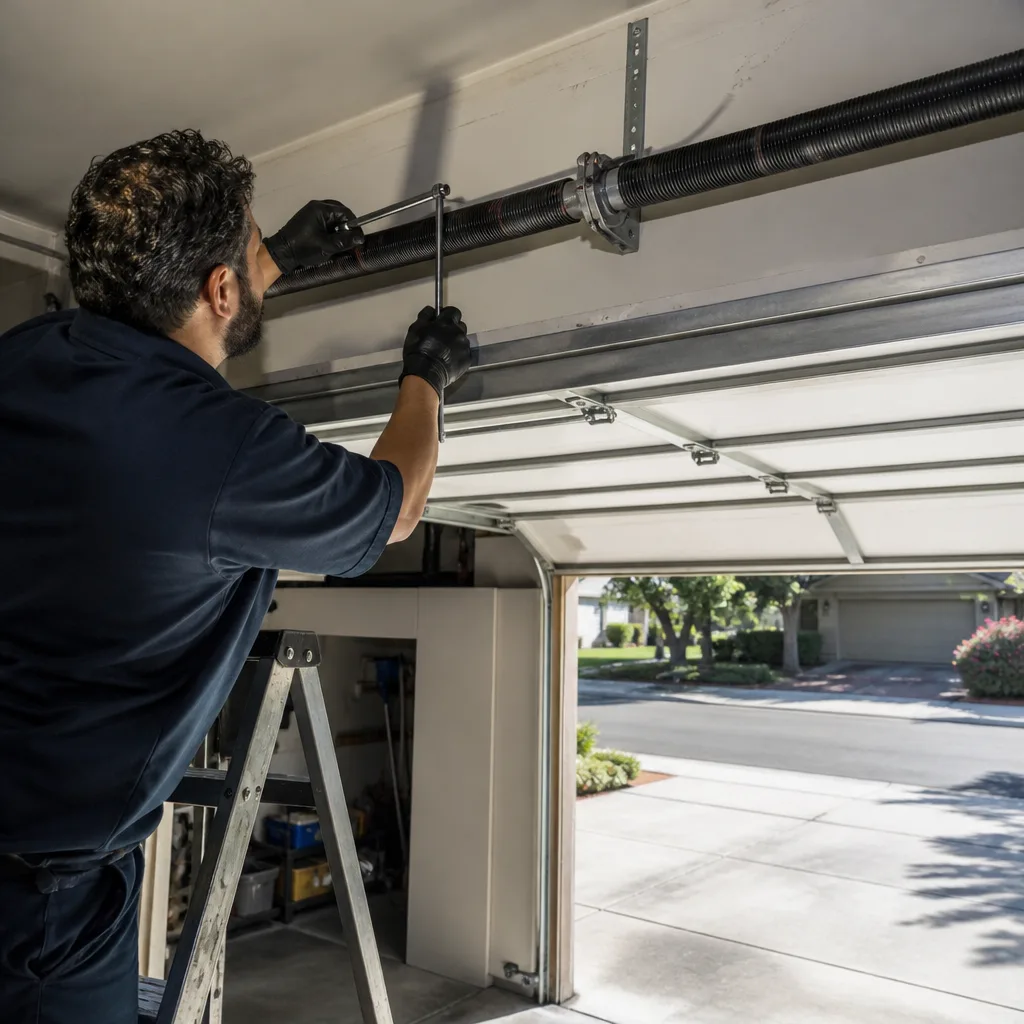 After
When to Call a Professional
If your door exhibits any of the following, call a garage door specialist—see our How to Hire a Garage Door Contractor in Roseville: A Step-by-Step Guide—rather than continuing to operate it: a torsion spring with visible coil gap variation, a cable with broken strands or visible fraying, a door that binds in afternoon heat, or a safety reversal test that fails or is borderline. These are not tune-ups. They’re component-level issues where continued operation accelerates damage, and in the case of cables and springs, where hands-on work without proper tools and technique carries real risk.
All Star Garage Door Co offers free estimates in Roseville. We’re a dedicated garage door specialist with multi-brand expertise across the industry’s major manufacturers, including Chamberlain, Genie, Clopay, and Amarr. Whatever brand is on your door or opener, we know it. Call (855) 684-6988 and we’ll tell you over the phone whether the symptom you’re hearing needs a visit or a five-minute fix you can do yourself.
Frequently Asked Questions
Spring replacement in Roseville typically runs $180 to $340 depending on spring size, door weight, and whether you need one spring or a pair. Torsion springs are rated in cycles, not years, and most Roseville homes have doors that work out to 10,000-cycle springs. When one spring fails, the other has matching wear, so we recommend replacing both. Call (855) 684-6988 for an exact quote. Estimates are free, and the price is agreed before any work starts.
Replacing a torsion spring is dangerous without the correct winding bars and technique if the spring is under tension. The stored energy in a wound torsion spring can cause serious injury during an uncontrolled release, which is why we recommend trained professionals handle spring work. If the spring is unwound, the replacement is straightforward. If it’s wound, call a specialist from All Star Garage Door Co in Roseville at (855) 684-6988.
A heat bind happens only during hot afternoons and is worse on the sunny side of the garage. A spring problem is present all day, every day, and gets worse over time. If the door works fine at 7 a.m. and struggles at 3 p.m., that’s thermal expansion in the tracks. The spring is fine. Call (855) 684-6988 for diagnosis if the afternoon bind persists.
Twice a year: once in March before summer heat and once in December before the cold season. Use white lithium grease on hinges and the opener chain, silicone spray on rollers, and nothing on the torsion spring. Roseville’s dry climate and dust load mean lubrication breaks down faster than in coastal areas. If you hear a hinge squeak between scheduled lubrications, service it then rather than waiting.
Most common replacement parts, including springs, rollers, cables, and opener gears, are stocked on our service vehicles. That means most Roseville garage door repairs are completed in a single visit. Parts availability depends on the door model and opener brand, but we stock components for the major manufacturers including Chamberlain, Genie, Clopay, and Amarr. If a door needs a nonstandard part, we quote it before ordering.
Roller replacement typically costs $85 to $150 for a full set, including the nylon-encased steel-bearing rollers we recommend for Roseville’s summer heat. Replacing worn rollers reduces opener strain, cuts noise, and extends door life, especially for doors that sit in afternoon sun and expand against the tracks in July. Call (855) 684-6988 for a free estimate.
The Bottom Line
Your garage door communicates its health constantly, through sound, through behavior, and through visible wear patterns that most homeowners never learn to read. The half-second hesitation before movement, the popping spring, the fuzzy cable, the July afternoon bind: these are all signals that a component is weeks from failure, not years. Learning to read them transforms garage door ownership from reactive emergency calls to planned, affordable maintenance. And when a signal does appear, the right response is a specialist who reads the same signals professionally, not a generalist who guesses. Roseville’s heat makes these warning signs more pronounced and more urgent than in milder climates. Pay attention, act early, and call (855) 684-6988 when the signal says it’s time.
Written by the team at All Star Garage Door Co, serving Roseville since 2015.